Lightning Preparedness before, during, and after a Thunderstorm
 Written by
Ann Herro has been writing about insurance and employee benefits for over 15 years. She covers topics ranging from car insurance to healthcare costs.
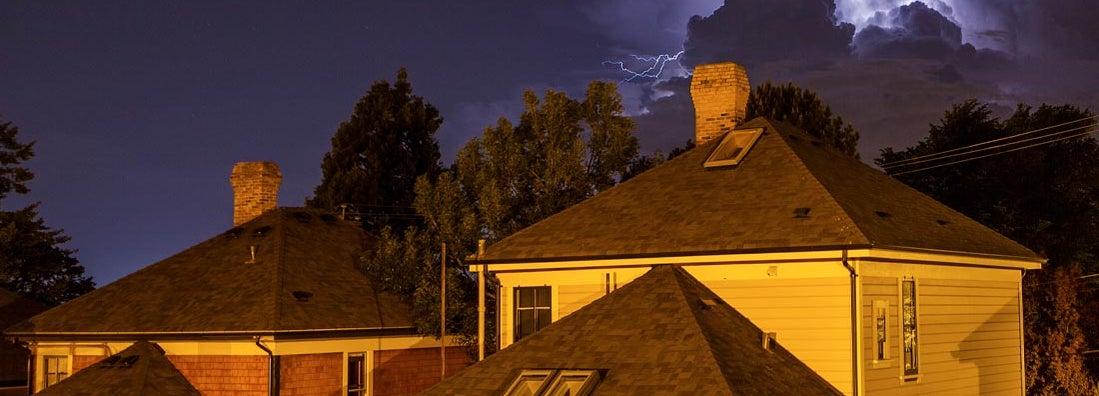
According to the National Fire Protection Association, from 2007 to 2011 local US fire departments responded to an average of 22,600 fires per year that were started by lightning. These lightning-related fires caused an average of nine civilian deaths and $451 million in direct property damage per year.
Also, according to the Insurance Information Institute:
- More than $900 million in lightning claims were paid out in 2018 to nearly 78,000 policyholders across the US
What can you do to protect yourself and your home when lightning threatens? Check out these preparation tips for when a storm is coming.
What to Do during a Thunderstorm
Thunderstorms that include dangerous and destructive lightning are common in many areas of the US. How can you prepare for a lightning storm in order to minimize the damage and stay safe?
Before a thunderstorm
You need to plan ahead of time what you will do when severe weather strikes your area. Have a plan in place for yourself and your family when you are at home, work, school, and outdoors.
- Know the severe weather risks for where you live and for places you visit.
- Have a NOAA Weather Radio with a battery backup to make sure you receive National Weather Service alerts in a timely manner.
- Make sure every member of your household is aware of what to do in the event of severe weather.
- Cut down or trim trees that may be in danger of falling on your home.
- Consider buying surge protectors, lightning rods, or a lightning protection system to protect your home, appliances, and electronic devices.
If warnings are issued for your area, pay attention. Never ignore severe weather warnings.
Also, long before the storm hits, you need to have appropriate home, renters, and auto insurance. These will help you pay for lightning damage to your home, your personal possessions, and your car.
During a thunderstorm
Once a storm has started, there are additional safety measures to take. These include:
- Head indoors. A building is the safest place during a thunderstorm. If you can’t find a building, get inside of your car or another vehicle.
- Stay away from windows.
- Find a place outside that is unlikely to flood if you can't find shelter. Avoid tall structures such as towers, trees, fences, telephone lines, and power lines.
- Squat low to the ground and assume a tucked position. Place your hands on your knees with your head tucked between them. Try to touch as little of your body to the ground as possible. Do not lie flat on the ground, as this provides a larger surface to conduct electricity.
- Drop into the tucked position if you feel your hair standing on end. This sensation means electrical charges are already running up your body from the ground toward an electrically charged cloud. Minimize your contact with the ground to minimize your injury.
After a thunderstorm
Be sure the storm is over before you head out of your shelter.
- Listen to authorities and weather forecasts for information on whether it is safe to go outside. Follow instructions about flash flooding and other dangers.
- Watch for fallen power lines and trees, and report them immediately.
What Not to Do during a Thunderstorm
There are some things you should never do in a thunderstorm in order to avoid dangerous lightning strikes and other potential threats to your personal safety.
- Never use a corded phone when you hear thunder. Cordless phones, cell phones, and other wireless devices are safe to use.
- When lightning is in the area, keep away from electrical equipment, wiring, and water pipes. Unplug sensitive electrical devices, and do not take a bath, shower, or use other plumbing during a thunderstorm.
- During a thunderstorm, avoid open areas and keep clear of isolated tall trees, towers, or utility poles. Don’t be the tallest object in an area! Lightning will gravitate toward the tallest object.
- Stay away from windows and doors, and do not lie on concrete floors or lean against concrete walls.
- Stay away from wires, fences, and other metal objects.
- Don’t stay in open vehicles, structures, and spaces. This means avoid convertibles, motorcycles, and golf carts, as well as porches, gazebos, baseball dugouts, and sports arenas. Golf courses, parks, playgrounds, ponds, lakes, swimming pools, and beaches can also be particularly dangerous during a thunderstorm.
Thunderstorm Safety Tips
Thunderstorms can produce large hail, strong winds, and dangerous lightning. Every thunderstorm has the potential to be dangerous, and should be treated as such.
- If you hear thunder, move to a safe place immediately in order to avoid the dangers of lightning. Sheds, picnic shelters, tents, or covered porches do not protect from lightning. Your best bet is a fully enclosed building.
- If you cannot get to a building, get into a hard-topped metal vehicle and close all the windows.
- Secure outside furniture.
- If you’re boating or swimming, get to land and find a sturdy, grounded shelter or vehicle immediately.
- If necessary, take shelter in a car with a metal top and sides. Do not touch anything metal.
- Avoid flooded roadways. Remember: turn around, don’t drown! Just one foot of moving water can sweep your vehicle away.

Save on Home Insurance
Our independent agents shop around to find you the best coverage.
Lightning Safety Rules
Always remember these lightning safety rules no matter where you are when the storm approaches.
- Consider postponing your outdoor activity if thunderstorms are in the forecast.
- Remember the 30-30 rule. Start counting to 30 after you see lightning. If you hear thunder before you reach 30, go indoors and suspend activities for at least 30 minutes after the last round of thunder.
- If no shelter is available, crouch low, with as little of your body touching the ground as possible. Lightning causes electric currents along the top of the ground that can be deadly over 100 feet away.
- Although you should move into a non-concrete structure if possible, being indoors does not automatically protect you from lightning. In fact, about one-third of lightning-strike injuries occur indoors. Stay away from concrete floors or walls, because lightning can travel through any metal wires or bars in concrete walls or flooring.
How to Protect Your Home from Thunderstorms
There are some steps you can take to protect your home from lightning damage. These include:
- Consider installing a lightning protection system. A lightning protection system will not prevent your house from being struck by lightning, but will instead provide a safe path from the location of the lightning strike (usually the roof) to the ground, minimizing the damage. If your home does not have a lightning protection system, the surge of electricity will carry along any conduit it can find, including your water pipes, gas pipes, and wiring systems (including cable or telephone lines), damaging everything in its wake and potentially igniting a fire.
- Unplug appliances and electronic devices. In addition to causing fires, lightning can create a power surge that damages your home or business electronics. If your appliances and electronics are unplugged during the storm, you can avoid some extensive and expensive damage.
- Install surge suppressors. Unplugging electronics is always the best option, but lightning storms will still happen while you’re not at home or at work. Transient voltage surge protectors will limit voltage flowing to your electronics to 1.5 times the normal voltage, thereby limiting the damage that a large surge could cause.
If your home is damaged by lightning, the best way to pay for repairs and recover quickly is with the help of your homeowners insurance. Your homeowners insurance covers damage that results from a lightning strike.
- Dwelling coverage: This covers the physical structure of your home and any attached structures from certain covered perils, including lightning. It also covers items like plumbing, heating, and permanently installed air-conditioning systems, and electrical wiring.
- Other structures coverage: This covers lightning damage to other structures on the property such as detached garages, tool sheds, retaining walls, and so on.
- Personal property coverage: This covers the cost of repairing or replacing your personal belongings, like your furniture, clothing, and electronics if lightning causes a fire or some other type of damage.
- Loss of use coverage: This helps you with additional living expenses if your home is damaged by a covered peril (e.g., lightning) and you cannot live in your home while repairs are being made. It typically covers expenses like housing, meals, storage, and more, as long as they are in line with your usual living expenses.
How Can an Agent Help Me Protect Myself from Lightning?
Local independent insurance agents know about the weather risks in your area and the insurance coverage that you need to protect yourself. Independent agents aren’t tied down to one insurance company, so they can get you multiple quotes for homeowners insurance that protects you from lightning and any other risks that you face.
https://www.cdc.gov/nceh/features/lightning-safety/index.html
https://www.ready.gov/thunderstorms-lightning
https://www.cdc.gov/disasters/lightning/safetytips.html