Understanding the FEMA Flood Insurance Rate Map
Here's how to understand zoning codes so you can locate the coverage you need.
 Written by
Christine Lacagnina has written thousands of insurance-based articles for TrustedChoice.com by authoring consumable, understandable content.
 Reviewed by
Cara Carlone is a licensed P&C agent with 20 years of experience. She has her P&C license in RI and TX and holds CPCU, API, and AINS designations.
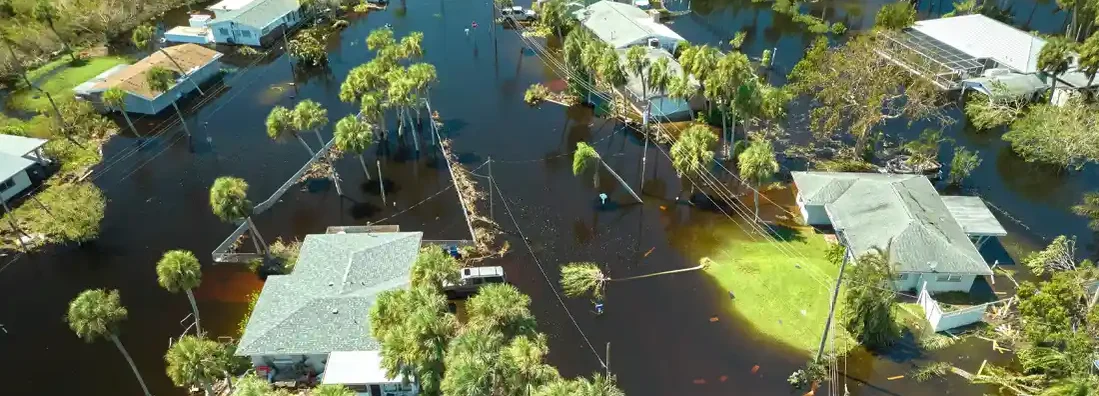
Purchasing a house right off the coast can offer several advantages, like a relaxing environment and many fun outdoor activities. However, one potentially large disadvantage is the increased risk of flooding. Just one bad storm could possibly leave your oasis in a soaking mess, both in terms of water damage and financial damage.
Before you buy your dream house on the coast, it's a good idea to learn all about the FEMA flood insurance rate map and learn about flood zones. Independent insurance agents are also here to help by eliminating confusion and finding the right flood insurance policy for you. First, though, here's more about the FEMA flood insurance rate map.
What Is the FEMA Flood Insurance Rate Map?
The FEMA flood insurance rate map displays communities in the U.S. and indicates elevation levels and designated flood zones. The different zones indicate the appropriate insurance premiums for specific properties.
Homes in high-risk areas will be subject to higher premiums than homes that may be close but are not marked as high-risk. Costs are associated not only with flooding history but also with the risk of future flooding.
FEMA terms glossary
- 100-year flood: This refers to a flood area that has a 1% annual chance of flooding. This also translates to a 26% chance of flooding over a 30-year mortgage.
- 500-year flood: This refers to a flood area that has a 0.2% annual chance of flooding.
Here are the major categories on the FEMA flood insurance rate map:
- Flood Zone A: These are high-risk flood areas that have a one in four chance of flooding during a 30-year mortgage. This is also known as a 1% annual flood risk or a 26% risk over 30 years. Zone A areas are often inland flood zones or areas that are not near the coast but have a risk of flooding. Zone A locations are often located near rivers, ponds, and streams.
- Flood Zone V: These are beach zones or areas that see a trend of wave action and are therefore at higher risk of flooding. Zone V often refers to coastal areas that have a 1% or greater chance of annual flooding. The increased risk is due to storm waves.
- Flood Zones B and X (shaded): These are areas with only a moderate flood hazard between the 100-500-year flood levels. Shaded Zones B and X are often located in rural areas or those not at a high risk of flooding, such as those protected by levees and dams.
- Flood Zones C and X (unshaded): These are areas with minimal flood hazards beyond the 500-year flood level. Zone C areas are often those with drainage or ponding issues, while zone X areas are typically outside the 500-year flood and are protected by levees from the 100-year flood.
- Flood Zone AE: These are areas that have a 1% chance of inundation by an annual flood event and a 26% chance of flooding over a 30-year mortgage. Zone AE areas are often located close to floodplains, lakes, and rivers. However, some areas that are low-lying regions without large bodies of water are sometimes classified as Zone AE.
- Flood Zone AH: These are areas with a 1% chance of annual flooding. These areas typically experience shallow flooding, typically from a pond, of an average of one to three feet.
- Flood Zone AR: These are areas that have a temporarily increased risk of flooding due to flood control system restoration, such as for levees or dams that have been decertified.
- Flood Zones VE and V1-30: These are areas that have a 1% chance of inundation by an annual flood event, as well as additional hazards caused by wave action due to storm-induced velocity. Zones VE and V1-30 have a 26% chance of flooding over a 30-year mortgage.
- Flood Zone AO: These are areas that are usually sheet flow on sloping terrain and have a 1% chance of an annual shallow flooding event. The average depth of these flooding events is between one and three feet. Zone AO areas often contain a river or stream.
Curvy lines on the map indicate how high the water in a certain area has the potential to get. The map also indicates the percentage of likelihood of the water actually reaching that height in a given year.

Flood Insurance Made Easy — Quote and Buy Online
With Diamondback Insurance, you can compare real-time quotes, choose the right coverage, and purchase your policy — all online in just minutes.
How Does FEMA Determine a Community's Risk Level?
FEMA determines a community's risk level based on past experience with observing flooding and storm trends for different locations. It also consults hydrology studies, changes in flood maps, and changes within the communities.
Communities with rapidly growing populations will be subject to new development, which could alter the water's route during a flood. FEMA may work with a city on projects to reduce the risk of flooding, like building levees.
Understanding the Difference Between Low Risk and No Risk
Having a home located outside a high-risk zone, or one that's located in a zone designated as "low-risk," doesn’t mean there's no risk of flooding ever happening. Especially with changing weather patterns and natural disasters becoming more frequent and severe in many different areas, having flood insurance can still be extremely valuable in “low-risk” areas. Work together with an independent insurance agent to get your home equipped with the appropriate amount of flood insurance for your flood zone.
Finding Your Flood Zone Designation
Locating your specific flood zone online is easy, thanks to FEMA's official website. Visit FEMA's Flood Map Service Center and input your address to pull up the map of your community. You'll be able to see which flood zone you're in, as well as nearby zones and potential flood hazards in your area.
FEMA's website, along with floodsmart.gov, provides interactive tools for viewing flood zone rate maps and more.
Can I Change My Flood Zone Designation?
No, your flood zone designation cannot be changed. However, you can change your home's elevation, which could reduce the cost of your flood insurance premium.
Flood insurance requirements involve measuring the elevation of the bottom of your home's lowest floor above sea level. The greater the distance, the less the property's risk of flooding. Once an area has flooded multiple times, FEMA may take action to require that the city dictate that you cannot rebuild property in that location unless it's elevated.
Are Flood Insurance Costs Different for Each Flood Zone?
Flood insurance costs can vary dramatically by flood zone. Living closer to the water leads to a much more expensive policy than a town or two over from a lake, ocean, or river.
However, houses near the shore that are built on stilts tend to have lower premiums than their ground-level neighbors. Any action taken to reduce your flooding risk can also lead to savings on flood insurance.
Additionally, flood insurance rates can be based on the following:
- Home elevation
- Home construction type
- Flood mitigation measures
You won't be able to determine how much your flood insurance policy will cost just by looking at FEMA's flood insurance rate map. A professional will have to decipher the cost for you based on the zone you're in and additional markings indicating flooding risk levels. A local independent insurance agent can help with this.
What to Do After Your Home Floods
If you experience a home flood, take the following steps to initiate the insurance claims process and help get life back on track.
Step 1: Get in touch
- Contact your family: If you have any family members out of town or out of state after a flood, call them and let them know you're safe.
- Contact your independent insurance agent: Your independent insurance agent can help get the process of filing flood insurance claims started for you after a flood. Be prepared to provide as much specific detail about the incident and damage as you can.
- Call FEMA: Call FEMA, report your situation, and take advantage of their free resources.
Step 2: Document any damage
- Document any structural damage: Walk through and around your home and document all damage on video.
- Document any personal property damage: Check all your personal belongings for damage, and document anything of note on video.
- Keep copies of any records: Save a copy of everything you send to your insurance company for your records. Keep copies of damage evidence, claims documents, and written documentation of the dates and times of your conversations with your carrier or independent insurance agent.
Step 3: File flood insurance claims
- Submit paperwork within 60 days: Most insurance companies will give you 60 days to sign and submit a Proof of Loss form after a flood.
- Request additional compensation: If home repairs will cost more than the adjuster's original estimate, you can request additional compensation from your carrier. This step only applies when necessary.
- Report additional damage: If you later discover more damage to your home than when you filed your claim, contact your independent insurance agent or carrier again and tell them ASAP.
- Stay connected: Your independent insurance agent can keep you updated through every step of the claims process and provide you with ETAs on when you can expect to receive compensation.
Step 4: Schedule an insurance adjuster visit
- Schedule a visit: Work with your insurance company to schedule a claims adjuster visit. The adjuster will likely need to assess the damage to your home and property in person.
- Prepare any required documents: You'll need to provide your insurance adjuster with evidence of your damaged property and have your insurance information, including your policy number, ready for them.
- Delay any repairs: Get your insurance adjuster's contact information and delay starting any required repairs until they give you the go-ahead.
Your independent insurance agent can also help walk you through the process of what to do after a house flood to ensure the claims process gets started right away.
Considering a Coastal Property?
Before you buy a coastal property, there are a few important considerations to take into account.
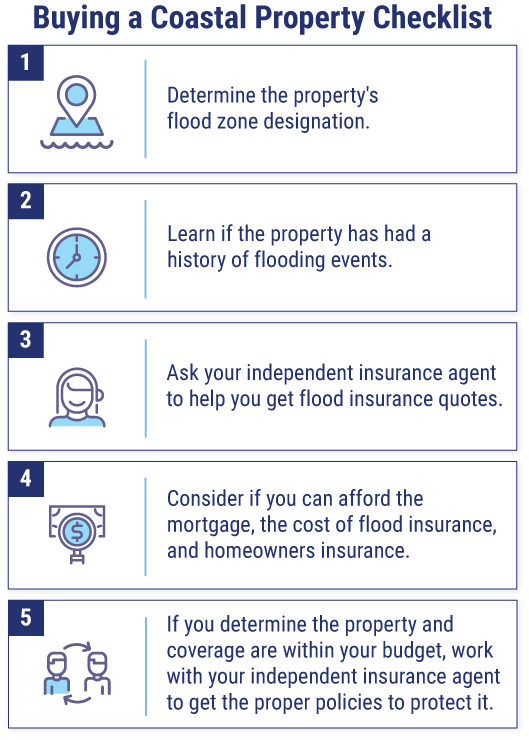
Checklist for buying a coastal property:
- Find out what flood zone the property is classified in.
- Check whether the property has experienced flooding in the past.
- Consult with your independent insurance agent for flood insurance quotes.
- Consider whether you can manage the mortgage along with flood and homeowners insurance costs.
- If the property and insurance fit your budget, coordinate with your independent agent to secure the right policies for protection.
If you're more of a visual learner, here's an infographic to help you determine whether a coastal property is right for you:
Your independent insurance agent can help you find the right flood insurance and homeowners insurance for a coastal property.
Flood Insurance Made Easy — Quote and Buy Online
With Diamondback Insurance, you can compare real-time quotes, choose the right coverage, and purchase your policy — all online in just minutes.
Why Work Together with an Independent Insurance Agent?
Browsing available options for flood insurance can be a confusing and time-consuming task. Independent insurance agents can help greatly simplify the process. These agents can shop and compare policies from multiple carriers for you.
Ultimately, they'll match you to the right policy that offers the best overall blend of coverage and cost. And down the road, they'll be there to help you file claims or update your coverage as necessary.
https://www.fema.gov/flood-maps/coastal/insurance-rate-maps
https://www.fema.gov/about/glossary/zone-ah
https://climatecheck.com/risks/flood/what-are-the-flood-zones-in-fema-maps